Reality, But Edited for Sale
I know it has been a while since I last wrote something and I am sure at least one person missed this, and yes that one person is me which is either self love or a problem that I will choose not to unpack right now. Life has been doing that thing where everything hits at once and you just stand there like none of this was in the plan, so I took a break, not a well thought out one, just a quiet disappearance where I convinced myself I would come back soon and then did not. But anyway, I am back now, and like always I am back with thoughts that probably sounded smarter in my head.
Let us talk about reality, not the actual version of it, but the one we all seem to live in without questioning too much. The more I think about it, the less it feels like something fixed and the more it feels like something we collectively agree on because it is easier that way. It is not that reality changes, it is that the version we accept gets edited, simplified, and repeated until it becomes the default setting in our heads. And the strange part is how little it takes for that shift to begin. Something works once, some way of showing or explaining something clicks with people, and that is enough. It does not have to be completely true, it just has to feel right in the moment. Once it feels right, it gets repeated, and once it gets repeated enough, it stops feeling like a perspective and starts feeling like the only version that exists.
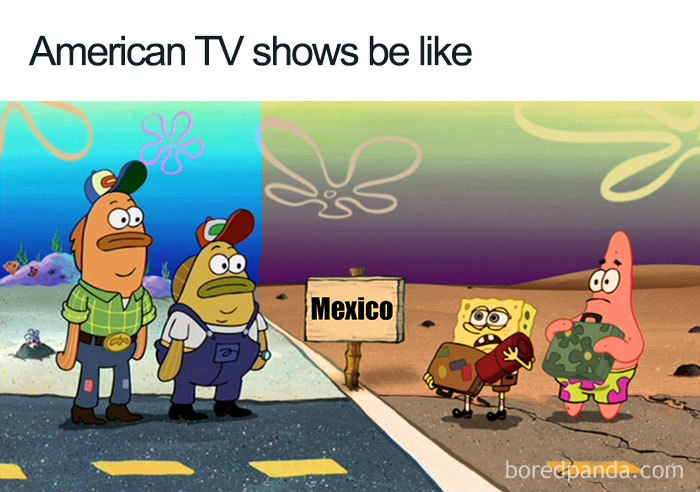
Take that very specific but somehow universal example of the orange tint in movies whenever Mexico is shown. It is so common that most people do not even notice it anymore, but once you do notice it, you cannot unsee it. An entire place reduced to a color palette, everything looking warmer and harsher than it actually is, as if the environment itself is part of the story being sold. That was never reality, it was a choice, probably made once to create a certain mood or make a scene visually distinct, and it worked. People accepted it, they remembered it, and more importantly they did not question it. So it stayed, and then it spread, because if something works there is no real incentive to change it. Other people used it not because they believed it was accurate, but because it was already understood.
And slowly that choice stopped being a choice and started becoming a standard. Now if you show the same place without that tint, it feels off, not wrong in reality but wrong in perception, like something is missing even though nothing actually is. That is the moment where perspective quietly replaces reality without asking for permission. Reality becomes perspective and perspective becomes reality, and the loop keeps running because it is efficient and no one really has a reason to interrupt it.
Once you start noticing this, it becomes difficult to ignore it elsewhere. The idea of what success is supposed to look like, the way relationships are expected to feel, the belief that struggle is necessary for something to have meaning, none of these are universal truths that we all discovered independently. They are patterns that worked, narratives that were repeated enough times to feel obvious. And we do not question obvious things, because obvious things feel safe and safe things are easy to accept. That is where the whole thing becomes more than just an observation and starts becoming something slightly uncomfortable. The moment a version of reality becomes easy to accept, it also becomes easy to sell. Simpler ideas spread faster, clearer narratives stick better, and people naturally gravitate towards things that do not require too much effort to understand. There is nothing wrong with that individually, people are just trying to get through their day without overanalysing everything they see, but at a larger scale it creates a system where what is effective matters more than what is accurate. And in that system, distortion is not a problem, it is an advantage.
Misinformation does not always look like obvious lies, sometimes it is just selective framing, sometimes it is exaggeration, sometimes it is leaving out enough context that the story still feels complete. It is subtle, and that is why it works. It does not force you to believe something, it just makes one version easier to accept than the others. And the people consuming it are not lacking intelligence, they are just operating within limits, limited time, limited attention, and very little incentive to question something that already feels familiar. Which also makes them predictable, and predictability is valuable in any system that is trying to influence large groups of people. Because if you know how people are likely to react, you can design the message accordingly, you can make it sharper, simpler, more emotionally engaging, and once it lands, it spreads on its own.
This is where it starts overlapping with things like power and politics, not in a dramatic way, but in a very practical one. Politics is not just about policies or facts, it is about perception, about what people believe is happening and what they think matters. If a certain narrative can be made simple enough and repeated enough, it does not need to be perfectly accurate, it just needs to feel right. Once it feels right, it becomes familiar, and once it becomes familiar, it becomes common sense. And common sense is rarely questioned because it feels like something everyone already knows. That is how something that started as a slightly edited version of reality can end up shaping real decisions and real opinions, not through force but through repetition and acceptance. The same loop keeps playing out, reality becomes perspective and perspective becomes reality, and the more it repeats, the harder it becomes to separate the two.
The strange part is that we are not just observing this system, we are part of it. Every time we accept something because it feels right instead of asking why it feels right, every time we share something because it sounds convincing, we are reinforcing that version of reality. We are helping it become more real, even if it started as something slightly distorted.
This is not some call to question everything all the time, that would be exhausting and probably not very useful, but maybe there is some value in pausing once in a while. Just a small pause where you look at something and ask yourself whether you actually know it is true or if it just feels true because you have seen it enough times. That is it, nothing dramatic, just a slight hesitation before accepting something as real. Because in a world where reality can be shaped into something more sellable, that hesitation might be the only space where you get to decide what you actually believe. Anyway, that is enough overthinking for one day, I will probably go back to making questionable decisions and then come back here to write about them like I have learned something meaningful. Until then, try not to trust something just because it feels familiar, it might just be well sold.


Comments
Post a Comment